When a Familiar Street Becomes a Film Location
See how a familiar street becomes a film location through framing, viewpoint and story, and learn to notice the choices that make a route feel transformed.
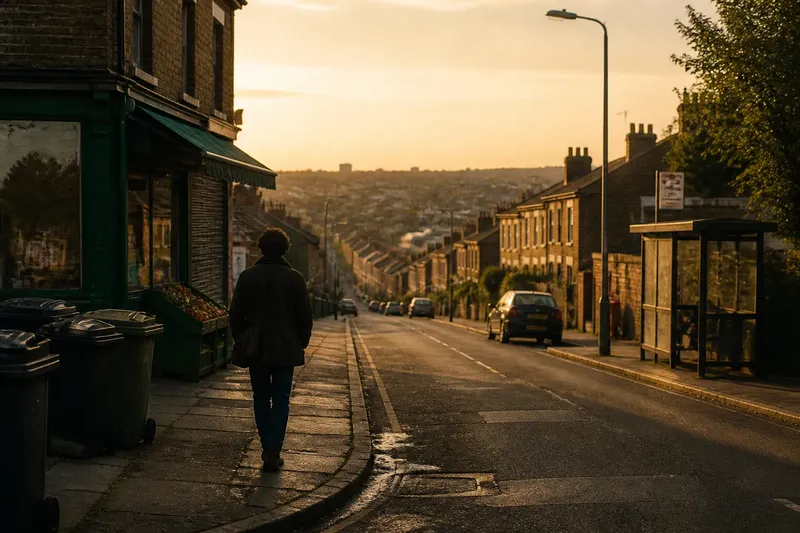
You cross the same junction on the way to the bus, stepping around the cracked paving and the wheelie bins outside the corner shop. Then you see it in a film: the street looks hushed, watchful, almost unfamiliar. A familiar street becomes a film location not simply because a camera records it, but because the image gives its details a new order and asks us to read them differently.
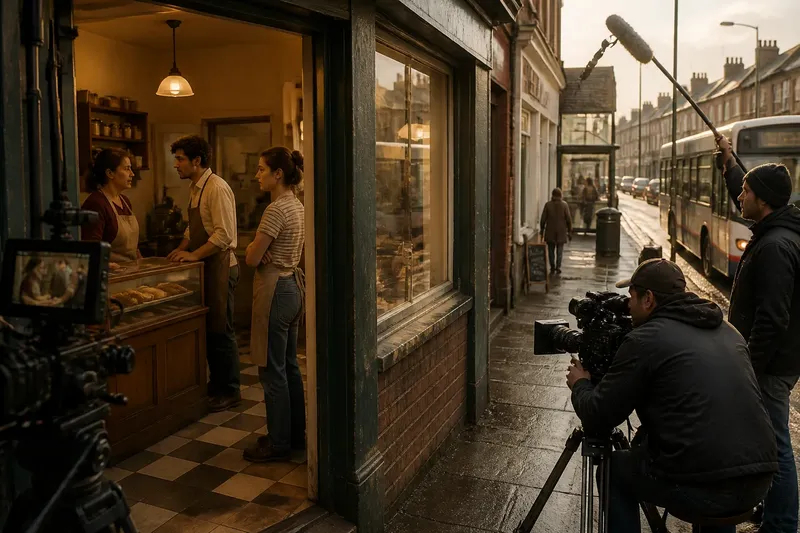
That change begins with selection. A film chooses where to stand, what to leave in view and what kind of action belongs there. The pavement, shopfronts and passing traffic remain real, but their meaning shifts with the frame and the story. Watching for those choices reveals how cinema can make a place feel both recognisable and newly charged.
The street as material
Before a location becomes an image, it is a working place. People use its routes, buildings carry their own histories, and ordinary activity continues whether a scene is being filmed or not. A row of terraces may be a shortcut for residents, a delivery route for a van and a boundary between busy roads. The camera encounters all of that, though it cannot show everything at once.
A street’s visible details offer more than background. A bus shelter can suggest waiting; a shuttered shop can make a stretch feel quiet; a hand-painted sign can locate a scene in a particular neighbourhood. These clues do not come with fixed meanings. Their force depends on what appears beside them and what the story has already led us to expect.
Even a plain stretch of pavement has a shape the camera can use. A long view down the road draws the eye towards a distant figure. A close view of a doorway makes entry or escape feel immediate. The location supplies physical possibilities; the filmmakers decide which ones matter to the scene.
Framing changes the route
Framing is the boundary of the image: what enters it, what falls outside it and how the visible elements sit together. A street that feels broad in person can look narrow when buildings crowd the edges of the shot. A small side lane can seem to open out if the frame includes a bright square at its far end.
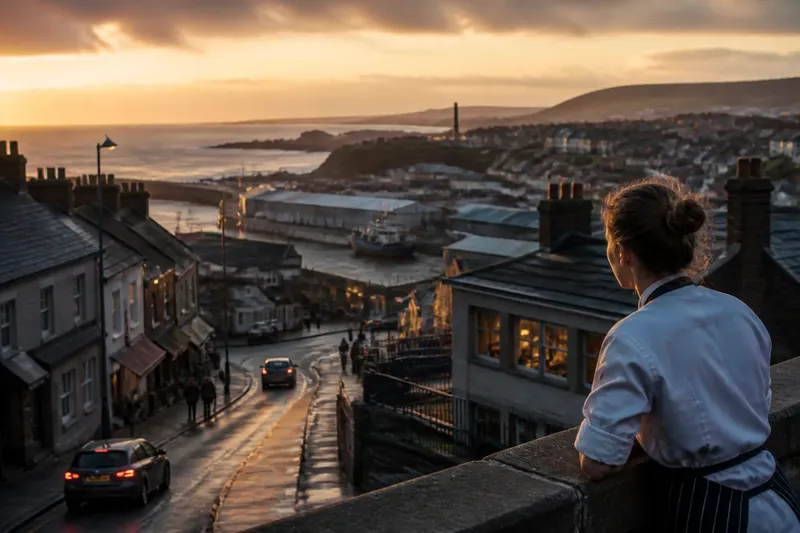
Camera height alters the same view. From close to pavement level, kerbs and road markings may dominate, making a journey feel exposed or difficult. From an upstairs window, the street can become a pattern of crossing lines and moving figures. Neither angle is the street’s definitive appearance. Each makes a different part of it legible.
Edges matter, too. A parked car may conceal a doorway until a character steps past it. A shop window can reflect a figure who is not yet visible in the street itself. Such choices control discovery, letting the audience meet a familiar place in stages rather than taking it all in at once.
When you revisit a location on screen, notice what the image excludes as well as what it includes.
Viewpoint gives meaning
A viewpoint is more than the camera’s physical position. It includes the relationship the film creates between the audience and the people in the scene. We might see a street with a character, watch them from across the road, or follow behind as they hurry towards a doorway. The location stays recognisable, but our access to it changes.
Following a character can turn a route into a sequence of decisions: which way to go, whether to stop, whom to approach. Watching from a fixed position can make the same street feel like a place people pass through while something remains unseen. A view from inside a café, looking out through glass, can divide the scene between a protected interior and the public pavement beyond.
Sound helps establish this relationship. Traffic heard beneath a conversation can make the street feel close and active. If the sound of the road drops away, a familiar corner may seem cut off from the surrounding neighbourhood. A distant train, a shop bell or footsteps on paving can point towards spaces the frame does not show.
These effects need not announce themselves. A slight shift in distance or sound can change whether a location feels welcoming, exposed, lonely or crowded. The result is not a verdict on the real street; it is an invitation to experience one version of it.
Story makes landmarks
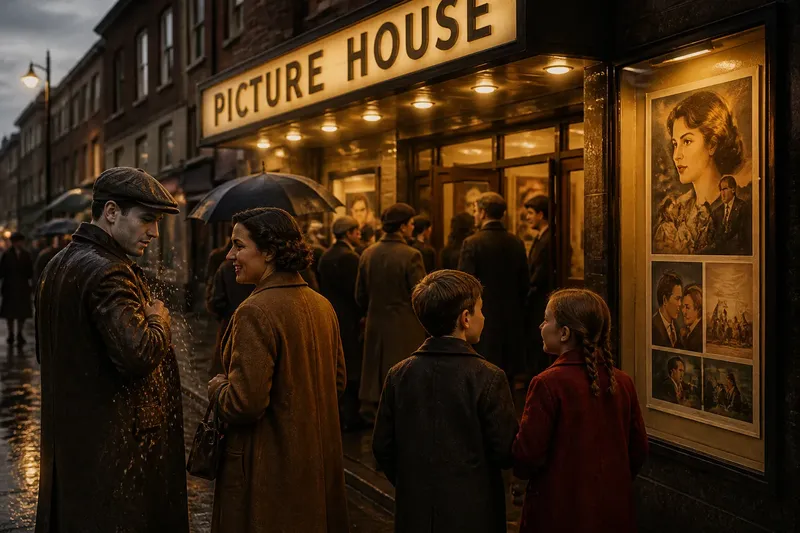
A place gains cinematic meaning through what happens there. A bus stop may first appear as a point of departure, then return as the spot where two characters meet again. The physical marker remains unchanged, but repetition links it to expectation and memory. In this way, a modest feature can become more memorable than a grand building.
Story also changes how viewers interpret local details. A closed gate may seem unremarkable until someone waits beside it. A brightly lit takeaway can register as a refuge after a tense walk. The film does not need to explain every feature; action and context encourage the audience to connect them.
Imagine a fictional drama set on a residential street where a character usually cycles straight past a community noticeboard. One evening, the story shows them stopping to read a handwritten message and then looking towards a darkened upstairs window. The camera might hold the board in the foreground while the window remains in the distance. The street has not changed, but the scene makes its everyday objects carry the character’s attention and unease.
This is how a location can become more than a container for events. The story gives viewers a reason to notice its thresholds, corners and routes. Later, those features can call the scene back to mind, even when the film has moved elsewhere.
Recognising a filmed street?
Why does the street look different on screen?
The camera selects a limited view, then combines it with movement, light, sound and story. A street’s appearance on screen is a constructed encounter with a real place, not a complete record of how it looks to everyone who uses it.
What makes a location recognisable?
Distinctive shopfronts, street furniture, building shapes and routes can help, but recognition may also come from a particular arrangement of familiar details. A lamppost beside a crossing can identify a corner even when the surrounding street is shown only briefly.
Can a film change how residents see their street?
It can add a screen association to a place that already has local meanings. Residents may recognise a doorway or junction through the scene, while continuing to understand it through their own daily routines and memories.
How can I tell whether a scene was filmed there?
Look for production notes, local film records or reliable location listings, and compare visible details with the present street. A scene may also combine views, use a different angle or show a location that has since changed, so a resemblance alone is not proof.
Recognition has layers
For viewers who know the neighbourhood, a location may prompt immediate recognition: that shop, that bend, that long walk to the station. For others, the same image may work as an imagined street, understood through its mood and story rather than its address. Both responses belong to the film’s life.
That difference matters because a recognisable location can circulate beyond its original setting. A viewer elsewhere may remember the scene as a portrait of a particular kind of place, while local residents may notice details that the story barely acknowledges. The film’s framing travels; the full texture of local knowledge does not always travel with it.
As you watch, separate what the image shows from what you know about the street. A film may invite you to treat a quiet road as threatening or a busy corner as comforting, but those impressions belong to the scene’s design. The street can hold other routines and meanings beyond the frame.
Reading the location closely
Returning to a filmed street in memory—or visiting it if you know where it is—can reveal how the scene was built. Compare the camera’s view with the route a pedestrian might actually take. Notice which entrances are visible, where the light falls and whether the scene follows the street’s natural direction or cuts across it.
Then ask what the story needed from the place. Did it need a clear path for a meeting, a corner where someone could disappear, or a window that made an interior seem exposed? These questions connect the physical setting to the scene’s purpose without mistaking one film’s version for the whole neighbourhood.
When a familiar street becomes a film location, it gains a second life made from selected views, sounds and events. The useful habit is to watch both at once: follow the story, then glance towards the edges of the frame. That is often where the street’s most revealing details are waiting.