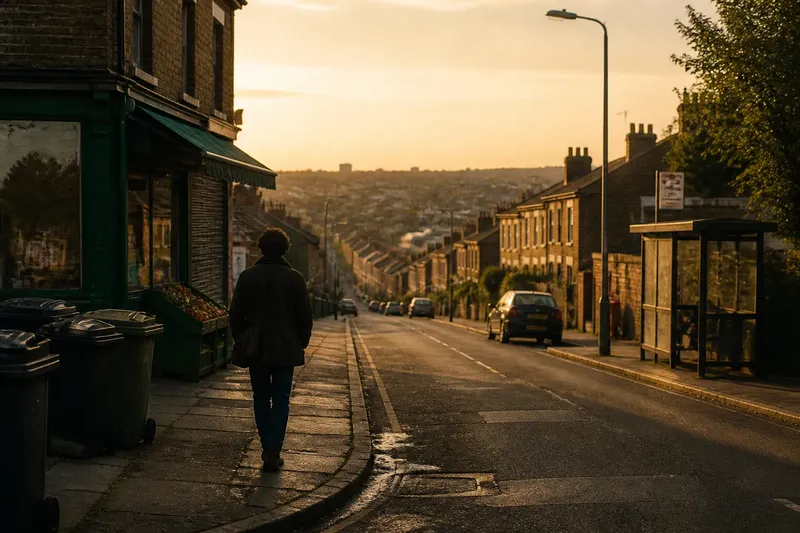
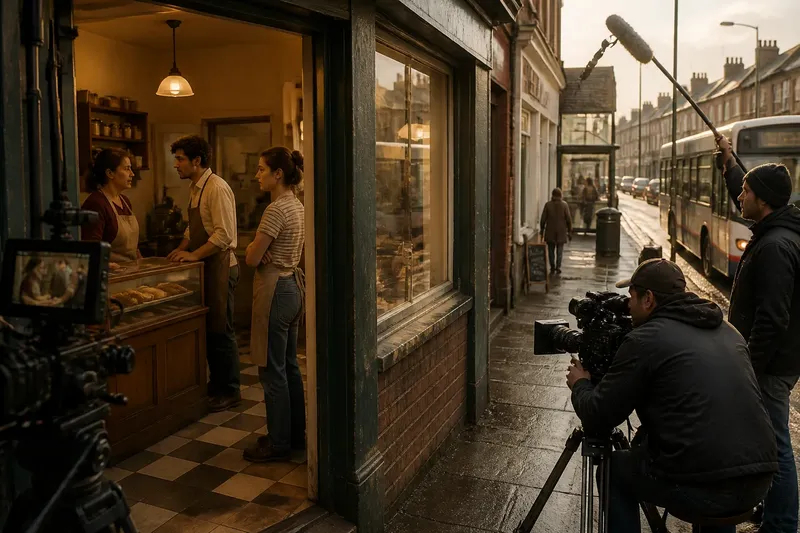
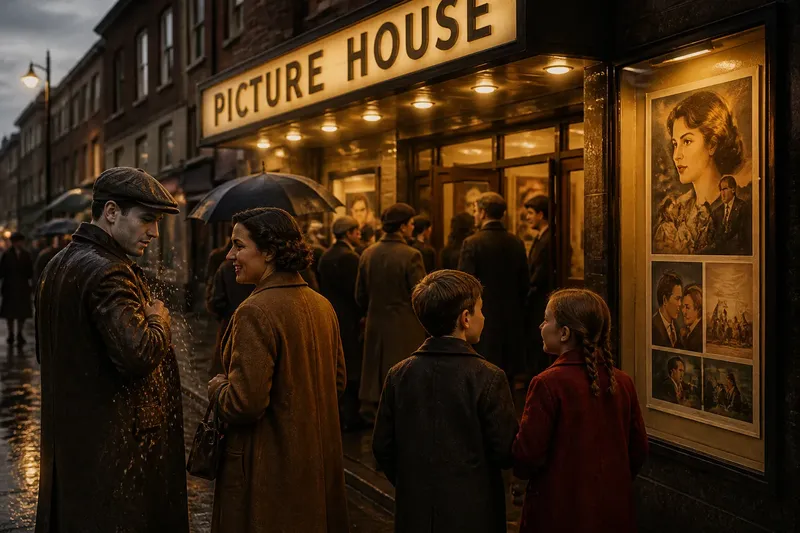
A Film Club Evening Built Around a Local Setting
Plan a film club evening around a local setting, with focused questions that help viewers notice how a film shapes place, memory and belonging.
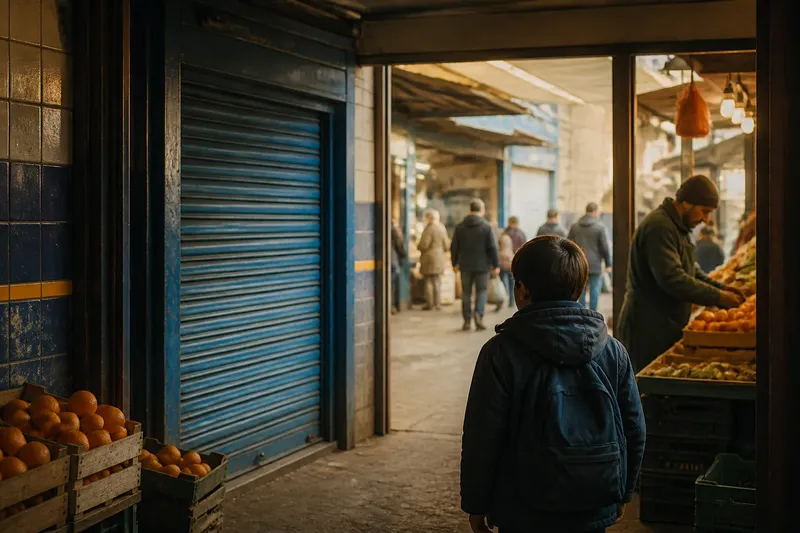
Someone pauses a film at a bus shelter, recognising the tiled wall behind the actors but disagreeing about what the scene says about the neighbourhood. That is a lively start for a film club evening about a local setting. Choose one place on screen, give viewers room to notice it, and let the discussion turn on how the film makes that place mean something.
One setting, many readings
A whole film offers plenty of routes into discussion: performance, plot, sound, editing and history. One setting gives everyone a shared point of attention without dictating what they must think. It might be a market, railway platform, high street, park or room that keeps returning.
Ask how a location shapes what characters can do, what they notice and what the audience is invited to believe. The aim is not to settle whether the film depicts a neighbourhood accurately. Viewers may know the location differently, or know only its screen version. Both responses can illuminate the film.
Choose a setting with enough presence to support conversation, but not so many meanings that the evening loses its centre. One doorway, square or stretch of road may be more useful than an entire city.
Keep the focus small enough for everyone to hold in mind.
Choosing the film
Choose a film in which the setting does visible work. A place might shape a character’s choices, set the mood, bring people together or appear differently as the story unfolds. It need not be locally famous; an ordinary corner can prompt richer observations than a landmark everyone already knows how to discuss.
Before settling on the film, watch it with the proposed setting in mind. Note when it appears, who occupies it, what lies beyond the immediate action and whether its meaning changes. If the location appears only briefly, consider whether that moment gives the group enough to examine. If it recurs, look for changes in framing, sound or company.
Check that participants can watch the film through a suitable, lawful screening arrangement. Tell them what to expect about language, subtitles or content that may affect their choice to attend. If the film is unfamiliar, a short, factual introduction can help without giving away its turns.
Inviting the group
Make the invitation specific enough to set expectations while leaving interpretation open. Name the film and the setting the group will focus on. Say whether the screening comes before the discussion, whether viewers may simply listen, and whether they need to prepare. Avoid announcing a single correct reading.
Say you are hosting a screening of an invented film called The Market Door. Its opening scene follows a child past a blue shutter as a stallholder stacks oranges; later, the family returns to the same aisle after an argument, and the camera stays outside while their voices mix with the clatter of crates. In the final market scene, the shutter is open and the family shares a paper bag of fruit. Invite viewers to notice how the repeated doorway, background sounds and changing distance between characters alter the market’s mood. The expected result is a discussion grounded in visible and audible details, rather than a test of who knows local market history.
If the setting is a real local site, describe it carefully. A fictional scene may have been filmed elsewhere, or assembled from several locations. Unless you have reliable information, make clear that the evening concerns the place as presented on screen, not a claim about the production’s filming history.
Questions for the room
Begin with observations before asking for interpretations. Invite viewers to recall what they saw or heard: the camera’s distance, movement through the space, background activity, light, signs, surfaces or sound beyond the dialogue. Then ask what those details might suggest. This gives people something specific to discuss and helps prevent the quickest interpretation from becoming the only one.
- What detail made this place feel particular rather than interchangeable?
- Who seems at ease here, and who appears to be passing through?
- Does the camera let us explore the setting, or keep us close to one character’s experience?
- Did the place feel different when it appeared again? What changed?
- What might someone familiar with this kind of place notice that another viewer could miss?
These are invitations, not a quiz. A viewer who remembers a rattling shutter may open up a conversation about atmosphere; someone else may have noticed how few people the frame allows into the scene. Follow a detail if it leads somewhere useful, then return to the chosen setting when the discussion starts to drift.
Memory and the screen
Help people distinguish between what the film shows and what they bring to it. One viewer may recognise a local rhythm in the way people share a pavement, while another sees the same sequence as a story of exclusion. Those readings can differ without cancelling each other out. The film supplies images and sounds; viewers interpret them through experience, assumptions and knowledge.
Offer ways to contribute without requiring anyone to disclose personal history. People can talk about a place they have visited, a detail they associate with a type of setting, or simply how the scene works as cinema. If a participant says, “That isn’t what this neighbourhood is like,” ask which part of the scene prompted the response. Do not ask them to speak for the whole community.
Imagine an invented film centred on a seaside promenade in winter. One scene shows empty benches, a gull calling beyond the frame and a character sitting apart from a group of walkers. One viewer reads the quiet as loneliness; another sees a familiar pause in the day. Pointing back to the benches, sound and camera position gives both readings something concrete to work with, without turning either viewer into a regional spokesperson.
Ask what the film shows before asking what the place means.
Hosting with care
A host guides attention without performing expertise. Share context if it helps the group understand the film, but separate confirmed information from your own reading. If you do not know how a location was chosen or whether a detail reflects local practice, say so. Curiosity is more useful than filling a gap with a confident guess.
Make room for quieter voices by asking whether anyone would like to add something, rather than putting one person on the spot. A pause after a question can help. If one speaker dominates, thank them and invite another angle: “We have heard how the scene feels from inside the space; what did the framing make visible or hide?” That redirects attention to the film instead of rebuking a participant.
Keep the conversation welcoming to people with different levels of film knowledge. Explain terms such as “framing” and “soundscape” in plain language: where the camera places us, or what we hear around the characters. Viewers need not know technical vocabulary to notice that the camera stays outside a doorway or traffic overwhelms a conversation.
Questions hosts often ask?
Should discussion happen before or after the screening?
Hold the main conversation after a first viewing, so people meet the film without a prescribed interpretation. A brief opening can name the chosen setting and invite viewers to notice details, leaving the questions for after the credits.
How many questions should you prepare?
Prepare a small handful and expect to use only those that fit the room. A question about who belongs in a setting may lead into camera position, background activity and memory, so there is little value in rushing through a long list.
What if nobody knows the location?
Ask how the film creates a sense of place through images and sound. Local knowledge can add another layer, but viewers can discuss atmosphere, access and character without identifying the street.
What if the group disagrees?
Ask each person to point to a moment or detail that supports their reading. Treat the difference as a chance to compare interpretations, not a dispute the host must settle.
Closing the conversation
End by returning to the setting, rather than asking the group to sum up the whole film. Invite each person to name one detail they will remember, or ask what they see differently after hearing other readings. A brief round is enough; nobody needs to produce a polished verdict.
If the conversation raises a local question the film cannot answer, keep it as a question rather than a conclusion. The group may wonder about a building’s history or how a street has changed, but answering that calls for appropriate sources. Keep the distinction clear between a film’s representation and what can be established about a real place.
Afterwards, share a short note with the club: the setting discussed, a few observations that emerged and the film’s details for anyone who missed it. Do not present the room’s conversation as the community’s settled view. A film club evening around a local setting works best when viewers leave with sharper eyes for who gets to occupy a familiar corner, what remains outside the frame and how a place changes across a story.